As an Amazon Associate we earn from qualifying purchases. This page may contain affiliate links.
Crockpot pork roast slow cooker recipes work best when you match the cut to the cook time, season the meat in layers, and check the internal temperature instead of trusting the clock alone. Follow the steps below and you will end up with pork that pulls apart easily, a flavorful cooking liquid you can turn into gravy, and a hands-off method you can repeat with different seasonings all year.
Why a Slow Cooker Works Well for Pork Roast
Pork roast is full of connective tissue, especially in the shoulder and butt. Low, steady heat breaks that tissue down into gelatin, which is why a slow-cooked roast feels moist and tender rather than chewy. A slow cooker holds temperature at a gentle level for hours, so the outside doesn’t scorch and the inside doesn’t race ahead of the rest of the meat.
The trade-off is that leaner cuts can dry out. A pork loin has far less fat and connective tissue than a shoulder, so it needs a shorter cook and a close eye on the thermometer. Knowing which cut you have is the first decision that shapes the whole recipe.
Choosing the Right Cut and Size
For a slow cooker, pork shoulder (sometimes sold as Boston butt) is the most forgiving choice. It has marbling and collagen that hold up over long cooking. Pork loin roast and pork sirloin roast are leaner and more affordable per pound, but they reward a shorter cook and a finishing step. Boneless cuts are easier to fit and carve. Bone-in cuts add flavor but take longer to heat through.
Check your slow cooker’s capacity before you shop. Most manufacturers recommend filling the insert no more than about two-thirds full and not going below about half full, because the cooker needs enough contents to heat evenly. A 3- to 4-pound roast usually fits comfortably in a 6-quart oval model, which is the most common size for family-style pork roast.
Cook Time and Temperature Reference
Use this table as a starting point. Times vary by cooker, by how full the insert is, and by whether the roast started cold from the refrigerator. Always confirm doneness with a thermometer.
| Cut | Typical Weight | LOW Setting | HIGH Setting | Target Internal Temperature |
|---|---|---|---|---|
| Pork shoulder (butt), boneless | 3 to 4 lb | 8 to 10 hours | 4 to 5 hours | 195°F to 205°F for shreddable texture |
| Pork shoulder, bone-in | 4 to 5 lb | 9 to 11 hours | 5 to 6 hours | 195°F to 205°F |
| Pork loin roast, boneless | 2 to 3 lb | 4 to 6 hours | 2 to 3 hours | 145°F, then rest 3 minutes |
| Pork sirloin roast, boneless | 2 to 3 lb | 5 to 7 hours | 2.5 to 3.5 hours | 145°F to 160°F, depending on texture preference |
The USDA lists 145°F as the safe minimum for whole cuts of pork, followed by a rest of at least three minutes. Shoulder is cooked far past that point on purpose, because the higher temperature converts collagen and makes the meat easy to pull. For questions about food safety on a specific cut or cooker, check USDA guidance or your cooker’s manual.
Step-by-Step Method for a Basic Crockpot Pork Roast
This method works for any of the recipes you find below. Once you have the process down, you can swap seasonings freely.
Step 1: Thaw the Roast Completely
Thaw the roast in the refrigerator, allowing roughly 24 hours per 4 to 5 pounds. Do not start a frozen roast in a slow cooker. The insert heats slowly, so a frozen center can spend hours in the temperature range where bacteria multiply quickly. If you’re short on time, thaw it in cold water in a leak-proof bag, changing the water every 30 minutes, and cook it right away.
Step 2: Season in Layers
Pat the roast dry. Rub it with 1 to 2 tablespoons of salt-and-spice blend, or a mix of 2 teaspoons kosher salt, 1 teaspoon smoked paprika, 1 teaspoon garlic powder, 1 teaspoon black pepper, and 1 teaspoon dried thyme or rosemary. Salt the meat a few hours ahead if you can, or the night before, to help it stay juicy.
Step 3: Sear (Optional but Recommended)
Searing adds browning and depth, though the slow cooker won’t do it for you. Heat 1 tablespoon of oil in a skillet over medium-high heat, then brown each side of the roast for about 2 to 3 minutes. Skip this step if you’re short on time, but expect a paler, softer crust.
Step 4: Build a Base Under the Meat
Place a layer of sliced onion, carrots, or celery on the bottom of the insert. Vegetables lift the roast off the bottom so it doesn’t scorch, and they flavor the cooking liquid. Add about 1/2 cup of liquid such as low-sodium chicken broth, apple cider, or water with a tablespoon of Dijon mustard. Pork roast releases plenty of its own juice, so more liquid is not needed.
Step 5: Set the Cooker and Leave the Lid Alone
Set the roast fat side up, cover, and choose LOW or HIGH based on your schedule and the chart above. Each time you lift the lid, the cooker can lose 15 to 20 minutes of heat, so resist the urge to peek. If you’re using a model with a probe, insert it into the thickest part of the meat, away from bone and the bottom of the pot.
Step 6: Check Temperature and Rest
Start checking about 30 minutes before the earliest time on the chart. For shoulder, you want the meat to pull apart with a fork and the thermometer near 200°F. For loin, you want 145°F. Move the roast to a cutting board and rest it for 10 to 15 minutes before shredding or slicing so the juices redistribute.
Step 7: Turn the Juices into a Sauce
Skim the fat from the cooking liquid, then pour it into a small saucepan. Simmer until it reduces by about a third. For a thicker gravy, whisk in 1 tablespoon of cornstarch mixed with 2 tablespoons of cold water and simmer for a minute more.
Five Crockpot Pork Roast Recipe Directions to Try
Each of these uses the same base method with different aromatics and liquids. Adjust cook time based on your cut.
- Garlic and herb pork roast: Rub with minced garlic, rosemary, thyme, and olive oil. Use chicken broth as the liquid and finish with lemon zest.
- Apple and Dijon pork roast: Use 1/2 cup unsweetened apple cider, 1 tablespoon Dijon mustard, and sliced apples on the base. Good with a pork loin roast on LOW for 4 to 5 hours.
- Smoky barbecue pork shoulder: Season with smoked paprika, brown sugar, and chili powder. Cook on LOW for 9 to 10 hours, then shred and toss with your favorite barbecue sauce.
- Brown sugar and soy pork roast: Combine 1/4 cup soy sauce, 2 tablespoons brown sugar, 1 tablespoon rice vinegar, and minced ginger. Pour over the roast and baste halfway through.
- Italian-style pork roast: Use dried oregano, basil, and garlic with a jar of marinara or crushed tomatoes. Serve over polenta or with crusty bread.
Common Mistakes to Avoid
- Cooking a lean loin on HIGH for too long. Loin dries out quickly. Use the shorter end of the window and check early.
- Adding too much liquid. Pork releases its own juices, so a deep pool of broth dilutes flavor and turns the meat watery. A half cup is usually enough.
- Lifting the lid repeatedly. Each check adds cooking time and can lead to uneven results.
- Skipping the rest. Slicing straight from the cooker lets juices run onto the board.
- Overfilling the insert. A packed cooker heats unevenly and may not reach a safe temperature in time.
- Relying on time alone. Every cooker runs differently. A thermometer is the only reliable check.
Tips for Better Results Every Time
- Sear the roast when you can. The flavor difference is noticeable, and it takes about 10 minutes.
- Cut the roast in half if it’s too large for your insert rather than forcing it in.
- Use the cooking liquid for gravy, sauces, or cooking grains. It’s full of flavor.
- For a crispy edge, shred the meat, spread it on a sheet pan, and broil for 3 to 5 minutes.
- Store leftovers in their liquid in the refrigerator. The liquid keeps the meat moist for reheating.
If you want more ideas for getting the most out of your cooker, Slow Cooker Tips and Tricks for Better Meals covers timing, liquid ratios, and layering. If you’re planning to shred a shoulder for sandwiches, Slow Cooker Pork Shoulder for Pulled Pork Sandwiches goes deeper on that specific cut. And if you’re still deciding on equipment, Slow Cooker Buying Guide explains what to look for in size, insert material, and controls.
Recommended gear
Most of these tools are optional, but a few make the process simpler and more reliable.
- Digital instant-read thermometer: A fast, accurate reading lets you confirm doneness without lifting the lid for long. Look for one with a thin tip so you can check the thickest part of the roast. Check price on Amazon
- Slow cooker liner bags: These disposable bags make cleanup quick and keep stubborn fat off the ceramic insert. Check the manufacturer’s label to confirm the bag fits your cooker size. Check price on Amazon
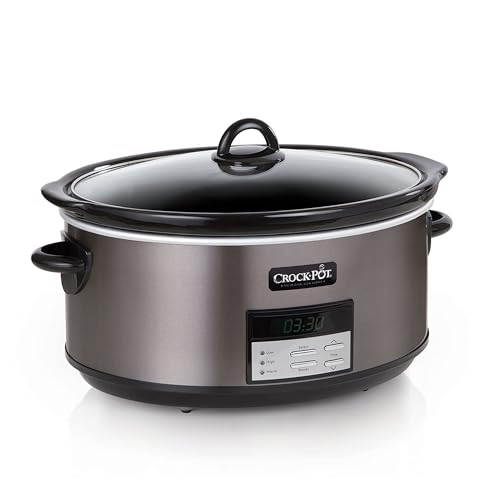
- Oval slow cooker, 6-quart: An oval shape fits a boneless shoulder or a loin roast more easily than a round pot. Manufacturers typically list the insert’s dimensions, so compare those against your roast before buying. Check price on Amazon
FAQ
Can I cook a pork roast on LOW overnight?
Yes, for a pork shoulder. A 3- to 4-pound boneless shoulder on LOW for 8 to 10 hours is a common approach. Pork loin is less forgiving and should not be left on LOW much beyond the times in the chart, or it will dry out.
Do I need to add liquid to a crockpot pork roast?
A small amount helps the cooker build steam and keeps the base from scorching. About 1/2 cup is usually enough, since the roast releases its own juices as it cooks.
Can I cook a frozen pork roast in the slow cooker?
It isn’t recommended. A frozen roast takes too long to reach a safe temperature in a slow cooker. Thaw it in the refrigerator first, then follow the recipe.
Why is my pork roast dry?
The most common causes are a lean cut cooked too long, too little fat or liquid in the pot, or slicing before the meat rests. Shoulder is more forgiving, so switching cuts often solves the problem.
Is it safe to keep the slow cooker on WARM after the roast is done?
Keeping the cooker on WARM is generally fine for a short period, such as an hour or two, while you finish sides. For longer holds or questions about specific food safety rules, consult the USDA guidance or your cooker manufacturer’s instructions.