As an Amazon Associate I earn from qualifying purchases. This page may contain affiliate links.
A meatless Monday sheet pan dinner is one of the easiest ways to get a full, satisfying meal on the table without standing over the stove. Roasted chickpeas, sweet potatoes, broccoli, peppers, and halloumi or tofu all caramelize well on a single tray, and cleanup is mostly one pan. The catch is that the pan itself matters more than most people expect. A thin, warped sheet will scorch the bottoms of your vegetables while the tops stay pale, and a shallow rim can make tossed ingredients slide off onto the oven floor. This guide looks at nine baking sheets and pans that suit vegetarian sheet pan cooking, based on their specifications, material reputations, and the patterns owners tend to report.
How We Selected These Picks
Our selection is based on research rather than hands-on trials. We compared manufacturer specifications such as gauge (thickness), material, dimensions, rim height, and oven-safe temperature limits. We also looked at brand reputation within home cooking communities and the recurring themes in owner feedback, including warping, nonstick coating wear, and how evenly vegetables brown. The criteria we weighted most heavily were heat distribution, rim height for tossed vegetables, and the ability to fit a standard half sheet (roughly 18 by 13 inches) in a home oven.
Our Top Picks
Quick Comparison
| Product | Best for | Key feature |
|---|---|---|
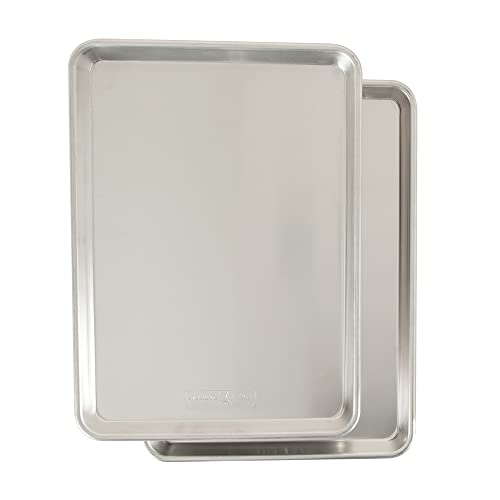
| Nordic Ware Half Sheet Baking Pan | Classic half-sheet roasting | Heavy-gauge aluminum construction |
| USA Pan Half Sheet Pan | Crisp bottoms on roasted veggies | Commercial-style aluminized steel |
| Chicago Metallic Commercial II Half Sheet | Budget-friendly everyday use | Uncoated, durable steel |
| Lodge Pre-Seasoned Cast Iron Griddle | Charred edges and high-heat searing | Retains heat exceptionally well |
| Caraway Non-Stick Baking Sheet | Easy release and cleanup | Ceramic-based nonstick coating |
| Williams Sonoma Goldtouch Pro Half Sheet | Even browning across the tray | Nonstick surface with a sturdy core |
| Cuisinart Chef’s Classic Non-Stick Baking Sheet | Simple, affordable nonstick option | Dishwasher-safe aluminum body |
| Wilton Perfect Results Non-Stick Jelly Roll Pan | Smaller batches and tight ovens | Compact footprint with a low rim |
| Vollrath Wear-Ever Aluminum Sheet Pan | Heavy use and professional-style results | Thick, rigid aluminum sheet |
Nordic Ware Half Sheet Baking Pan
This is a dependable choice for cooks who want a straightforward, full-size half sheet for roasting big batches of chickpeas, cauliflower, and sweet potato wedges. It suits anyone who values even heat conduction over fancy features.
Key specs
- Material: heavy-gauge aluminum
- Standard half-sheet dimensions (approximately 18 by 13 inches)
- Low rim suitable for roasting and baking
Pros
- Conducts heat evenly for consistent browning
- Sturdy enough to resist warping at typical roasting temperatures
- Fits standard home oven racks
Cons
- Aluminum can discolor over time with acidic ingredients
- Hand washing is often recommended to preserve the finish
USA Pan Half Sheet Pan
Home cooks who want restaurant-style crisp bottoms on roasted vegetables will appreciate this pan. Its aluminized steel construction is built for the high-heat roasting that gives tofu and broccoli their best texture.
Key specs
- Material: aluminized steel
- Half-sheet footprint for standard ovens
- Reinforced rim for tossing ingredients
Pros
- Resists warping under sustained high heat
- Promotes browning and crisp edges
- Durable finish for frequent use
Cons
- Heavier than aluminum options, which can be harder to lift from the oven
- Can require parchment or foil to prevent sticking on delicate items
Chicago Metallic Commercial II Half Sheet
This pan is aimed at cooks who want a dependable, no-frills workhorse for weeknight roasting without spending heavily. It is a practical pick for anyone cooking vegetarian sheet pan dinners several nights a week.
Key specs
- Material: uncoated steel
- Half-sheet size for standard home ovens
- Rolled edges for sturdiness
Pros
- Budget-friendly choice for regular use
- Uncoated surface is free of nonstick wear concerns
- Holds up well to repeated washing
Cons
- Food can stick without parchment or oil
- Steel conducts heat less evenly than thicker aluminum
Lodge Pre-Seasoned Cast Iron Griddle
Cooks who like deeply charred edges on peppers, zucchini, and halloumi may prefer a cast iron griddle. It works best for shorter, hotter roasts rather than long, low-temperature bakes.
Key specs
- Material: pre-seasoned cast iron
- Flat griddle surface suited to high-heat cooking
- Oven-safe and compatible with stovetop use
Pros
- Retains heat very well for a strong sear
- Pre-seasoned surface improves with use
- Durable enough for decades of use with proper care
Cons
- Heavy and awkward to handle when hot
- Requires hand washing and periodic re-seasoning
Caraway Non-Stick Baking Sheet
This pan suits home cooks who want vegetables and halloumi to release cleanly without much oil. The ceramic-based nonstick coating is a good match for cleanup-focused cooks who make sheet pan dinners often.
Key specs
- Material: aluminum core with ceramic-based nonstick coating
- Half-sheet size
- Designed for everyday oven use
Pros
- Easy release reduces sticking of roasted vegetables
- Less oil needed for browning
- Quick cleanup after dinner
Cons
- Nonstick coatings wear over time, especially with metal utensils
- Typically recommended for moderate rather than very high heat
Williams Sonoma Goldtouch Pro Half Sheet
Cooks who want even browning across a full tray of tofu, chickpeas, and sweet potato will find this pan a strong fit. It is designed for those who prioritize consistent results across the whole surface.
Key specs
- Nonstick surface over a sturdy metal core
- Half-sheet footprint
- Reinforced rim for stability
Pros
- Designed for even browning edge to edge
- Nonstick surface simplifies release and cleanup
- Sturdy construction resists warping
Cons
- Premium option with a higher cost than basic sheets
- Nonstick finish requires gentle utensils
Cuisinart Chef’s Classic Non-Stick Baking Sheet
This is a practical pick for cooks who want a nonstick sheet without a premium price tag. It fits well into regular weeknight rotation for roasted vegetable medleys and simple sheet pan meals.
Key specs
- Material: aluminum with nonstick coating
- Half-sheet size for standard ovens
- Dishwasher-safe construction
Pros
- Budget-friendly nonstick option
- Dishwasher-safe for convenience
- Lightweight and easy to handle
Cons
- Thinner gauge can warp at high temperatures over time
- Nonstick coating may wear sooner than premium options
Wilton Perfect Results Non-Stick Jelly Roll Pan
Smaller households or cooks with compact ovens may prefer a jelly roll pan, which is shorter than a half sheet. It is well suited to two-serving sheet pan dinners and portion-controlled meal prep.
Key specs
- Material: steel with nonstick coating
- Jelly roll size, smaller than a half sheet
- Low rim
Pros
- Fits smaller ovens and countertop convection models
- Good for small batches
- Nonstick surface aids easy release
Cons
- Limited capacity for feeding a larger household
- Low rim makes tossing ingredients more difficult
Vollrath Wear-Ever Aluminum Sheet Pan
This is a commercial-grade option for serious home cooks who make large sheet pan dinners for family gatherings or meal prep batches. Its thick, rigid aluminum resists the warping that plagues thinner pans.
Key specs
- Material: heavy-gauge aluminum
- Full-sheet and half-sheet sizes available
- Rolled edges for strength
Pros
- Very rigid, with minimal warping
- Heats evenly for consistent roasting
- Built for heavy, frequent use
Cons
- Large size may not fit every home oven
- Uncoated surface needs parchment or oil to prevent sticking
Buying Guide
Choosing the right pan for a meatless Monday sheet pan dinner comes down to a few practical factors. Start with size: a half sheet is the most versatile choice for home ovens, while a jelly roll pan works for smaller meals. Check that the pan fits on your oven rack with room for air to circulate. Next, consider material. Aluminum and aluminized steel generally distribute heat more evenly than thin steel, which helps vegetables brown uniformly. Nonstick coatings make cleanup easier but tend to wear out, so they suit cooks who prioritize convenience over long-term durability.
Rim height matters more than many cooks expect. Vegetables tossed with oil, spices, and sauce can slide off a low rim, and a rim of about one inch is a good balance for most sheet pan dinners. Gauge, or thickness, affects warping: thicker metal holds its shape under high heat, while thin pans can buckle and cause uneven cooking. Finally, check the oven-safe temperature limit listed by the manufacturer, since many roasting recipes call for 400 to 425 degrees Fahrenheit.
Important Features and Specs to Check
- Material (aluminum, aluminized steel, cast iron, or nonstick-coated metal)
- Gauge or thickness, where listed
- Exact dimensions, including whether it is a half sheet or jelly roll size
- Rim height for tossing and holding juices
- Manufacturer-stated maximum oven temperature
- Care instructions, including whether the pan is dishwasher safe
Choosing by Need
If you cook for a family and want maximum roasting space, choose a full-size or half-size aluminum pan with a rim of at least one inch. If you prioritize quick cleanup, a nonstick option will save time, though you should plan to replace it when the coating wears. If you want charred, restaurant-style edges, a cast iron griddle delivers a strong sear. For smaller households or compact ovens, a jelly roll pan keeps portions manageable.
Things to Watch Out For
Avoid thin, bendy pans that rattle when you lift them, as these are prone to warping in the oven. Be cautious with nonstick coatings at very high temperatures, since many manufacturers recommend staying within a moderate range to protect the finish. Parchment paper or silicone liners can help with cleanup, but check that they are rated for your oven temperature. If you cook acidic ingredients such as tomatoes or lemon-heavy marinades on bare aluminum for long periods, the surface may discolor, which is cosmetic but worth knowing.
Health note: if you have questions about nonstick coating safety or cookware materials for specific dietary needs, consult a professional such as a registered dietitian or your healthcare provider.
FAQ
What size sheet pan is best for a meatless Monday sheet pan dinner?
A half sheet, roughly 18 by 13 inches, is the most common choice for home cooks. It has enough room to roast about four to six servings of vegetables and a protein like chickpeas or tofu without overcrowding. Overcrowding is one of the main reasons vegetables steam instead of browning, so leave space between pieces.
Do I need a nonstick baking sheet for roasted vegetables?
No. Vegetables roast well on uncoated aluminum or steel when lined with parchment or brushed with a little oil. A nonstick surface simply makes release and cleanup easier, which is helpful on busy weeknights.
Why do my vegetables come out soggy instead of crisp?
The most common causes are overcrowding, too low an oven temperature, and wet vegetables. Pat produce dry before tossing with oil, spread pieces in a single layer, and roast at 400 to 425 degrees Fahrenheit. Flipping halfway through also helps even browning.
Can I use a sheet pan for tofu and chickpeas together?
Yes, but cook them with attention to timing. Press and cube tofu, then roast it until golden before adding chickpeas that have been dried and oiled. Pieces with different moisture levels can finish at different times, so check and rotate the pan as needed. You can also give each ingredient its own section of the pan.
How do I prevent a sheet pan from warping in the oven?
Choose a thicker pan with a rigid construction, avoid placing a cold pan into a very hot oven, and do not run cold water over a hot pan. Letting the pan cool slightly before washing also reduces stress on the metal.
Is aluminum safe for roasting acidic vegetables and sauces?
Many home cooks use aluminum pans for tomato-based or lemony roasts without issue. Prolonged contact with highly acidic foods can discolor bare aluminum, so lining the pan with parchment or choosing an anodized or coated surface can help. Consult manufacturer care instructions for specifics.
How should I clean a sheet pan after a vegetable roast?
Let the pan cool, then soak it in warm, soapy water to loosen browned bits. For stubborn residue, a paste of baking soda and water works well on most surfaces. Follow the manufacturer’s guidance on whether the pan is dishwasher safe, since harsh detergents can dull some finishes.
Conclusion
A good meatless Monday sheet pan dinner starts with the right pan. For classic half-sheet roasting, the Nordic Ware Half Sheet Baking Pan and USA Pan Half Sheet Pan are solid, well-regarded choices. Cooks who want the easiest cleanup should look at the Caraway Non-Stick Baking Sheet or the Cuisinart Chef’s Classic Non-Stick Baking Sheet. For charred edges and high-heat searing, the Lodge Pre-Seasoned Cast Iron Griddle stands out. Households that roast large batches will appreciate the rigidity of the Vollrath Wear-Ever Aluminum Sheet Pan, while those cooking for one or two may prefer the compact Wilton jelly roll pan. Match the pan to your oven, your cooking volume, and your cleanup preferences, and your vegetarian sheet pan dinners will come out crisp and evenly browned.