As an Amazon Associate I earn from qualifying purchases. This page may contain affiliate links.
Air fryer acorn squash is one of the easiest ways to get caramelized, tender squash with crisp edges in well under an hour. The catch is that acorn squash is dense, has a thick skin, and releases moisture as it cooks, so not every air fryer handles it the same way. This guide looks at six models that suit the job, based on published specifications, brand reputation and the patterns owners tend to describe in their feedback. We did not run these machines ourselves. Instead, we focused on basket capacity, cooking temperature range, basket shape, preheat behavior and how easy the basket is to clean after a sticky, sugary squash batch.
Our Top Picks
Quick Comparison
| Product | Best for | Key feature |
|---|---|---|
| Ninja AF101 Air Fryer | Small households and weeknight squash halves | Compact 4-quart basket with a simple dial |
| Instant Vortex Plus 6-Quart | Feeding two to four people | Six-quart basket with a dedicated roast setting |
| Ninja Foodi 6-in-1 Dual Zone | Cooking squash and a side at the same time | Two independent baskets with separate timers |
| COSORI Pro II Air Fryer | Users who want precise temperature control | Adjustable temperature in small increments |
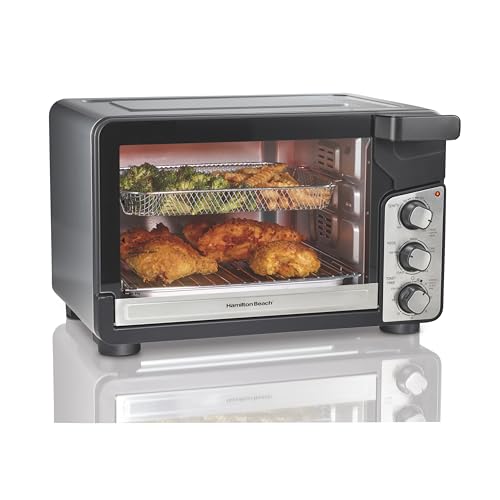
| Cuisinart TOA-70 Air Fryer Toaster Oven | Cooking whole halves or larger cuts | Full oven-style interior with a wide rack |
| Ninja Foodi Digital Air Fry Oven | Sheet-pan style batches | Large interior that fits a full baking tray |
Ninja AF101 Air Fryer
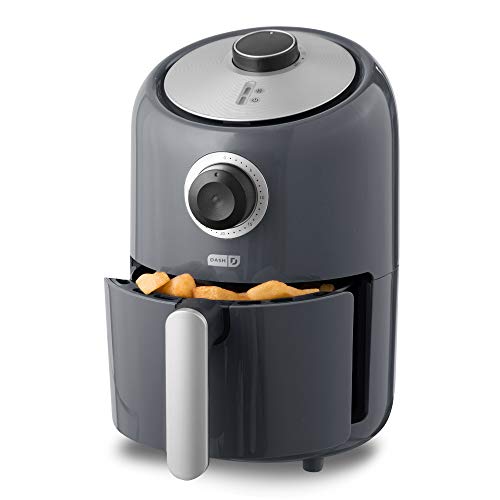
This is a good fit for someone cooking one or two acorn squash halves at a time, or for a kitchen with limited counter space. It is a straightforward machine that rewards simple, reliable cooking rather than complicated programs.
Key specs
- Capacity of about 4 quarts
- Temperature range up to 400°F
- Basket with a non-stick coating and a removable crisper plate
- Manual dial controls for time and temperature
Pros
- Compact footprint that fits under most cabinets
- Simple controls that are easy to set by feel
- Basket is easy to slide in and out while hot
Cons
- Four quarts is tight for more than two squash halves
- No preset for roasted vegetables, so you set time manually
Instant Vortex Plus 6-Quart
Households of two to four people often find the six-quart size a sensible middle ground. It holds more squash per batch and leaves room for the seeds and a second vegetable.
Key specs
- Capacity of about 6 quarts
- Temperature range up to 400°F
- Preset programs, including a roast-style setting
- Non-stick basket with a shake reminder
Pros
- Enough room for a full acorn squash cut into wedges
- Preset options reduce guesswork for first-time users
- Shake reminder helps even browning on cubed pieces
Cons
- Larger footprint on the counter
- Some owners prefer a manual dial to pressing through presets
Ninja Foodi 6-in-1 Dual Zone
If you want to roast squash alongside a protein or a second vegetable, a dual-basket model lets you run two cooking zones at different times and temperatures. This suits families who cook a full dinner in one appliance.
Key specs
- Two independent baskets with separate timers
- Manufacturer lists a combined capacity well above a single-basket model
- Sync and match-cook functions for finishing both zones together
- Temperature range up to 450°F in some zones
Pros
- Cooks squash and another dish without a second appliance
- Sync function helps both zones finish at the same time
- Higher temperature range suits deep caramelization
Cons
- Large footprint that needs significant counter space
- More buttons and settings than a single-basket fryer
COSORI Pro II Air Fryer
Cooks who like to fine-tune their results, especially for thick-skinned vegetables that need a lower temperature to cook through before browning, will appreciate precise control. It is well suited to anyone who has struggled with squash that is charred outside and firm inside.
Key specs
- Capacity of about 5.8 quarts
- Adjustable temperature in small increments
- Non-stick basket with a digital display
- Multiple preset programs
Pros
- Fine temperature steps help dial in a two-stage cook
- Good capacity for a mid-size household
- Clear digital display makes timing easy to track
Cons
- Presets are less specific than some competitors
- Owners sometimes report that the fan is audible during long roasts
Cuisinart TOA-70 Air Fryer Toaster Oven
Whole halves, larger pieces, or a cook who wants to bake something else on the same rack are better served by a countertop oven with air frying built in. This suits people who already use a toaster oven and want more range.
Key specs
- Full oven-style interior with a wide rack
- Multiple cooking functions, including convection and air fry
- Temperature range up to 450°F
- Crumb tray and removable racks
Pros
- Fits halved squash placed cut-side down on a rack
- Can bake, roast and reheat in the same unit
- Wide interior handles larger portions
Cons
- Air fry results can be less concentrated than a basket model
- Takes up more counter space than a basket fryer
Ninja Foodi Digital Air Fry Oven
If you often batch-cook vegetables on a sheet pan, a larger-interior air fry oven can handle a full tray of squash wedges with room to spare. It is a practical choice for meal prep.
Key specs
- Large interior sized for a full baking tray
- Digital controls with multiple cooking modes
- Temperature range up to 450°F
- Included accessories for air frying and baking
Pros
- Fits a full sheet of squash wedges in one batch
- Digital controls are clear and easy to program
- Good for baking, roasting and air frying
Cons
- Heavy and bulky to move or store
- Overkill for a single serving
Buying Guide
Choosing the right machine for air fryer acorn squash comes down to how much squash you cook, how you cut it, and how you like the texture. Since acorn squash is firm, dense and slow to soften, you want an appliance with enough airflow and a temperature range that reaches at least 375°F to 400°F.
Selection criteria
- Capacity that fits your typical batch, usually two to four squash halves or one large tray of wedges
- Maximum temperature of at least 400°F for caramelized edges
- A basket or interior that lets air circulate around the cut sides
- Non-stick surfaces that release sugary residue easily
Important features
- Preheat option: Preheating for three to five minutes helps the outside start browning right away.
- Shake reminder or flip alert: Useful for cubed squash that needs even browning.
- Removable basket: Makes it easier to clean up melted sugar and squash juices.
Specs to check
- Quart capacity and whether the manufacturer lists usable space or total volume
- Maximum temperature in Fahrenheit
- Whether the basket is dishwasher safe
- Cord length and counter footprint
Choosing by need
- One or two people, weeknight cooking: A compact basket model is enough.
- Family dinners: Look at six-quart and larger baskets.
- Cooking more than one dish: A dual-zone unit lets you finish two things together.
- Whole halves or sheet-pan batches: An oven-style air fryer gives you more room.
Things to watch out for
- Overcrowding the basket, which steams the squash instead of browning it
- Cutting pieces too thick, which leaves the center firm
- Skipping the oil, which keeps the skin from crisping
- Letting sugary glazes burn in the last few minutes
For general setup and care, see How to Use an Air Fryer: A Beginner’s Guide and How to Clean an Air Fryer. If you are still deciding on a model type, Air Fryer Buying Guide covers the broader choices, and Best Air Fryers compares more options.
FAQ
How long does acorn squash take in an air fryer?
Halved acorn squash usually takes about 20 to 30 minutes at 375°F to 400°F, depending on thickness. Cubed or wedged squash often finishes in 12 to 18 minutes. Check for a fork to slide in easily through the thickest part.
Do I need to peel acorn squash before air frying?
No. The skin softens and becomes edible when roasted, and it helps the squash hold its shape. Wedges with the skin on crisp more reliably than peeled cubes.
Should I cover the squash while it cooks?
Do not cover it. Air fryers work by circulating hot air, and a lid or foil blocks that airflow and can make the squash soggy.
What temperature works best for air fryer acorn squash?
Most cooks start around 375°F for even cooking through the flesh, then finish at 400°F for browning. Going much higher can char the sugars before the center softens.
Why is my squash still firm in the middle?
The pieces may be too thick or the basket may be overcrowded. Cut the squash into smaller wedges, arrange them in a single layer, and add a few extra minutes.
Can I cook acorn squash with the seeds?
Yes. Scoop out the seeds and pulp, then roast the seeds separately if you want them. Many people roast the seeds in the same basket for the last few minutes, but they cook faster than the squash, so check them early.
Is it safe to leave an air fryer unattended while cooking squash?
Air fryers run hot and should not be left unattended for long periods. If you have concerns about fire safety or appliance use, consult the manufacturer’s manual or a qualified professional.
Conclusion
For a small household or weeknight squash, the Ninja AF101 is a practical, simple starting point. Families who want more room should look at the Instant Vortex Plus 6-Quart. If you want to cook squash alongside another dish, the Ninja Foodi 6-in-1 Dual Zone handles two zones at once. The COSORI Pro II suits anyone who wants finer temperature control, while the Cuisinart TOA-70 and Ninja Foodi Digital Air Fry Oven fit whole halves and sheet-pan batches. Match the capacity to how much you usually cook, make sure the maximum temperature reaches at least 400°F, and avoid overcrowding for the best results with air fryer acorn squash.