As an Amazon Associate I earn from qualifying purchases. This page may contain affiliate links.
Sheet pan dinner ideas are one of the easiest ways to get a full meal on the table with almost no cleanup. You toss protein and vegetables with oil and seasoning, spread everything across one pan, and let the oven do the work. The catch is that the pan matters. A flimsy pan warps, a dark pan can scorch the bottoms, and a pan that is too small crowds the food and leaves you with soggy vegetables instead of caramelized ones. This guide looks at eight sheet pans and roasting options that suit different kitchens and cooking styles. We selected them based on published specifications such as gauge, coating type, dimensions and oven-safe limits, general brand reputation, and the patterns owners tend to mention in their feedback, including warping, nonstick wear and how well a pan handles high heat. We did not run our own tests on these products.
Our Top Picks
Quick Comparison
| Product | Best for | Key feature |
|---|---|---|
| Nordic Ware Half Sheet Pan | Everyday roasting for most home cooks | Heavy aluminum construction that resists warping |
| USA Pan Half Sheet | Crisp, browned vegetables and proteins | Aluminized steel with a light-colored finish |
| Lodge Cast Iron Griddle | Searing meats and charring vegetables | Seasoned cast iron that holds high heat |
| Williams Sonoma Goldtouch Half Sheet | Even browning with nonstick convenience | Nonstick coating on a heavy-gauge base |
| Chicago Metallic Commercial II Half Sheet | Budget-friendly, reliable everyday pan | Heavy-gauge steel that is widely available |
| Cuisinart Chef’s Classic Nonstick Half Sheet | Easy release and quick cleanup | PFOA-free nonstick surface |
| Silicone Baking Mat for Half Sheet Pans | Sticky glazes and delicate fish | Reusable nonstick liner that protects the pan |
| Rectangular Glass Baking Dish | Casseroles and tray-bakes with sauce | Deep sides for liquids and layered dishes |
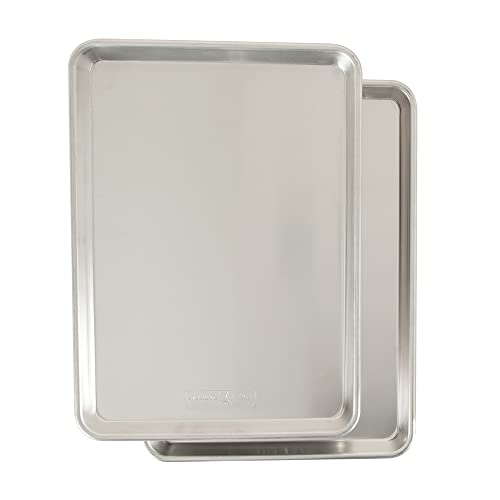
Nordic Ware Half Sheet Pan
This is a dependable starting point for people who want one pan that handles nearly every sheet pan dinner. It suits weeknight cooks who roast chicken thighs, potatoes and broccoli several times a week and want a pan that will stay flat for years.
Key specs
- Standard half sheet size, about 18 by 13 inches
- Heavy-gauge aluminum body
- Rolled rim for easier handling
- Oven-safe at typical home roasting temperatures
Pros
- Heavy aluminum resists bending at high oven temperatures
- Conducts heat evenly across the surface
- Standard size fits most home ovens and racks
Cons
- Bare aluminum can brown food more slowly than darker pans
- Needs parchment or oil to prevent sticking
USA Pan Half Sheet
Home cooks who want deep browning and crisp edges on roasted vegetables and chicken often gravitate toward this type of pan. It is a strong choice for anyone who has been disappointed by soggy results from thin pans.
Key specs
- Half sheet dimensions, about 18 by 13 inches
- Aluminized steel construction
- Light-colored, non-stick-style finish on some versions
- Straight, sturdy sides
Pros
- Strong browning and crisping for vegetables and meats
- Sturdy build resists warping under heavy loads
- Well regarded in professional-style baking circles
Cons
- Heavier than standard aluminum pans
- Coatings on some finishes can wear down with abrasive cleaning
Lodge Cast Iron Griddle
This option suits cooks who want high, direct heat for searing, charring peppers or crisping sausage. It fits people who already own cast iron and want to extend it into oven dinners.
Key specs
- Pre-seasoned cast iron
- Reversible design with a griddle side and a grill side
- Oven-safe and suitable for stovetop use
- Heavy, dense construction
Pros
- Holds high heat well for searing and charring
- Pre-seasoned surface improves with regular use
- Durable enough to last for many years with proper care
Cons
- Very heavy and awkward to move when hot
- Acidic ingredients like tomatoes can affect the seasoning
Williams Sonoma Goldtouch Half Sheet
This pan is aimed at cooks who want nonstick release without giving up even browning. It works well for glazed chicken, salmon and sweet potatoes that tend to stick to plain metal.
Key specs
- Half sheet dimensions
- Heavy-gauge steel with a nonstick interior
- Rolled edges
- Oven-safe to standard home roasting temperatures
Pros
- Nonstick surface releases food with little residue
- Even browning across the pan
- Sturdy base resists warping
Cons
- Nonstick coating can degrade if overheated or scraped with metal tools
- Higher-end finish compared with basic pans
Chicago Metallic Commercial II Half Sheet
This is a practical budget pick for people who roast a few times a week and want a no-frills pan that holds up. It suits first-time sheet pan cooks and anyone outfitting a second kitchen.
Key specs
- Half sheet dimensions
- Heavy-gauge aluminized steel
- Reinforced rim
- Oven-safe for typical roasting temperatures
Pros
- Approachable option for everyday roasting
- Reinforced edges help the pan keep its shape
- Easy to find and easy to replace
Cons
- Lighter finish can brown less than darker pans
- Owners sometimes mention minor warping with very high heat over time
Cuisinart Chef’s Classic Nonstick Half Sheet
This pan fits people who want fast cleanup and easy release for sticky sauces and marinated proteins. It is a good match for busy households where cleanup is the biggest obstacle to cooking at home.
Key specs
- Half sheet size
- Nonstick coating on aluminum or steel base
- PFOA-free coating according to the manufacturer
- Oven-safe up to the temperature listed by the brand
Pros
- Food slides off easily, including sugary glazes
- Cleanup usually requires only a quick wipe
- Lightweight enough for easy handling
Cons
- Nonstick wear is a common concern over time, especially with metal utensils
- Not ideal for high-heat broiling beyond the listed limit
Silicone Baking Mat for Half Sheet Pans
A reusable silicone liner is a strong accessory for sheet pan dinners that stick, such as honey-glazed chicken or delicate white fish. It suits cooks who want to protect their pans and cut down on parchment waste.
Key specs
- Sized to fit a standard half sheet pan
- Food-grade silicone
- Heat-resistant to typical oven temperatures listed by the maker
- Reusable and dishwasher-safe on most versions
Pros
- Prevents sticking without added oil
- Reusable, reducing the need for parchment
- Protects pan surfaces from scratches
Cons
- Does not promote browning as well as a bare metal surface
- Can warp slightly if placed on a very hot pan without support
Rectangular Glass Baking Dish
When your sheet pan dinner includes a sauce, a grain or a layered vegetable bake, a deeper glass dish is often a better tool. It is ideal for cooks who want to roast chicken with a sauce or make a tray of baked pasta and vegetables.
Key specs
- Rectangular shape with straight sides
- Tempered glass construction
- Deeper than a standard sheet pan, suited to liquids
- Oven-safe to the temperature listed by the manufacturer
Pros
- Holds sauces and liquids without spilling
- Visibility makes it easy to check browning
- Retains heat well for serving at the table
Cons
- Heavy and can crack with sudden temperature changes
- Browns less evenly than metal and is not suited to searing
Buying Guide
Choosing a sheet pan is less about brand names and more about a few construction details that decide whether the pan works well for your cooking. Start by thinking about what you cook most often, then check the features below.
Selection Criteria We Used
We looked at published specifications first, including gauge or thickness, material, dimensions and oven-safe limits. Next, we considered brand reputation for consistent manufacturing. Finally, we looked at recurring patterns in owner feedback, such as warping, nonstick wear, uneven browning and ease of cleaning. We did not test these products ourselves, so treat this as a research-based guide rather than a hands-on review.
Important Features
- Material: Aluminum heats quickly and evenly. Aluminized steel tends to resist warping. Cast iron holds high heat but is heavy. Glass is useful for sauces but browns less.
- Gauge or thickness: Heavier pans resist bending when they heat up and cool down quickly, a common cause of food sliding.
- Rim design: Rolled or reinforced rims make the pan easier to lift and help it keep its shape.
- Finish: Light-colored finishes brown gently. Darker finishes brown faster and can scorch the bottoms of delicate food.
- Coating: Nonstick is convenient for glazed and sticky foods but needs careful use and eventual replacement.
Specs to Check Before Buying
- Overall size. A half sheet, roughly 18 by 13 inches, fits most home ovens. Quarter sheets are better for small batches.
- Oven-safe temperature listed by the manufacturer, especially for nonstick and silicone.
- Whether the pan fits your oven rack with clearance for air to circulate.
- Dishwasher safety, if that matters to you. Hand washing extends the life of most nonstick coatings.
Choosing by Need
- Everyday roasting: A heavy aluminum or aluminized steel half sheet covers most recipes.
- Sticky glazes and fish: A nonstick pan or a silicone liner on a sturdy base.
- High-heat searing and charring: A cast iron griddle.
- Sauces and layered bakes: A glass baking dish with deeper sides.
- Tight budget: A basic heavy-gauge steel half sheet with a reinforced rim.
Things to Watch Out For
- Thin pans warp in the oven and cause food to slide toward one side.
- Overcrowding is the most common reason sheet pan vegetables turn soft. Use two pans when needed.
- Metal utensils scratch nonstick coatings. Use silicone or wooden tools.
- Very high broiler heat can damage some coatings and silicone liners. Check the maker’s limits.
- Glass dishes can crack if moved suddenly from the freezer or a cold counter into a hot oven.
FAQ
What is the best oven temperature for sheet pan dinners?
Most sheet pan dinners roast well between 400°F and 425°F. Higher heat gives vegetables more browning and crisp edges, while lower heat suits delicate fish. Check the internal temperature of meat with a food thermometer, aiming for 165°F for chicken and 145°F for most fish.
Should I line my sheet pan with parchment or foil?
Parchment is a good choice for sticky or sugary foods because it prevents sticking without adding much oil. Foil is useful for easy cleanup but can cause some foods to stick and can reflect heat unevenly. A silicone liner is a reusable alternative to both.
Why do my vegetables come out soggy instead of crisp?
The most common causes are overcrowding, too little oil and a pan that is too cold when the food goes in. Spread vegetables in a single layer with space between pieces, use enough oil to coat them lightly, and preheat the pan if your recipe allows it.
Can I cook frozen vegetables and proteins together on a sheet pan?
You can, but timing is important. Frozen vegetables release more water, so they need higher heat and extra time. Cook proteins and vegetables on separate pans if they have very different cooking times, or add ingredients in stages.
How do I prevent cross-contamination with raw meat on a sheet pan?
Keep raw meat on its own pan or at least separated from ready-to-eat foods. Wash your hands and any utensils after handling raw poultry or meat. If you are unsure about food safety for a particular recipe, consult a food safety resource or a qualified professional.
How often should I replace a nonstick sheet pan?
There is no fixed schedule. Replace a nonstick pan when the coating is flaking, deeply scratched or no longer releases food well. Owners often report that careful hand washing and avoiding metal utensils extend the life of the coating considerably.
Is a heavier sheet pan always better?
Heavier pans usually resist warping better and distribute heat more evenly, which is valuable for sheet pan cooking. However, very heavy cast iron is hard to handle when hot, so the best weight depends on your comfort and how often you lift the pan out of the oven.
Conclusion
For most home cooks, a heavy-gauge half sheet pan is the most useful single purchase for sheet pan dinner ideas. The Nordic Ware Half Sheet Pan and the USA Pan Half Sheet are both strong fits for everyday roasting, with the USA Pan leaning toward deeper browning. If sticky glazes and easy release are your main concern, the Williams Sonoma Goldtouch Half Sheet or the Cuisinart Chef’s Classic Nonstick Half Sheet are worth considering, along with a silicone liner to protect the surface. Cooks who want high heat and charred results should look at the Lodge Cast Iron Griddle, while the Rectangular Glass Baking Dish suits saucy, layered bakes. A basic Chicago Metallic Commercial II Half Sheet is a practical choice for a budget-minded kitchen. Whichever pan you choose, focus on even spacing, enough oil and oven temperatures between 400°F and 425°F for the best results.
For more ideas, see Sheet Pan Dinners Recipes: 6 Easy Weeknight Meals and Tips, Sheet Pan Chicken Thighs and Vegetables, and Simple Sheet Pan Salmon and Asparagus Dinner. If you want to plan several meals at once, Meal Prep Ideas Explained: Batch Recipes, Storage and a Weekly Plan offers a useful framework, and How to Clean, Season, and Store Baking Sheets explains how to keep your pans in good condition.